

It's No Joke:
Graphic Novels
Belong in
School Libraries!
SERVICES
I'm a paragraph. Click here to add your own text and edit me. It’s easy. Just click “Edit Text” or double click me to add your own content and make changes to the font.
I'm a title. Click here to edit me.
'm a paragraph. Click here to add your own text and edit me. It’s easy. Just click “Edit Text” or double click me to add your own content and make changes to the font.
'm a paragraph. Click here to add your own text and edit me. It’s easy. Just click “Edit Text” or double click me to add your own content and make changes to the font.
I'm a title. Click here to edit me.
'm a paragraph. Click here to add your own text and edit me. It’s easy. Just click “Edit Text” or double click me to add your own content and make changes to the font.
Using Graphic Novels Effectively
Comic books used to be frowned upon and confiscated in schools. But today, school librarians and teachers are using comics and graphic novels to enrich their curriculum.
Interaction
Lots of students love comic books and webcomics. And now with the rising popularity of graphic novels and superhero blockbusters, comics are more mainstream than ever. These digital tools can help turn students from comic fans into comic creators. The apps and websites in this list empower creative kids as they learn art, storytelling, and digital-creation skills. Whether your students want to become the next Stan Lee or just wants to draw favorite cartoon characters, there's a great tool on this list to help students tap into their creative side. These interactive websites would be great to add to any graphic novel collection as part of a makerspace in a school library.
-
MAKE BELIEFS COMIX, created by author Bill Zimmerman, who has written more than a dozen books on drawing and other topics, offers a fun comics-construction tool for kids; parenting tips; and educator resources for language instruction and special-needs and ESL students. Kids get a detailed explanation about how to use the tool, along with frequent hints and writing prompts; they can choose from pre-drawn characters, customize their positioning and size, and add objects, background colors, and dialogue. Each character has a few "emotions" to choose from; facial expressions and body language help create a story. Finished comics can be printed or emailed.
-
COMIC LIFE offers kids a quick, simple way to turn a story into a cartoon, using predesigned templates. You'll need to use ready-made images, either stock art, pictures you've drawn using other programs, or snapshots from your computer's webcam. Images can be color-corrected, and kids can add dialogue captions. Comic Life’s third version provides a few new effects including the ability to knock out image backgrounds. Users can post questions to the forums on the manufacturer's site; kids can easily export finished comics to Facebook or other locations.
Implementation
Ideas for implementing comics and graphic novels into the current curriculum.
 Encourage self-expression, inspire student writing, spark critical thinking, explore writing in nontraditional formats, and much more. |
|---|
 Scholastic provides us with a guide to using graphic novels with children and teens. |
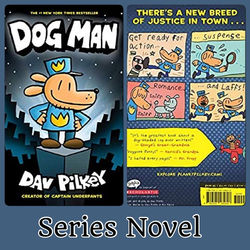 Teaching with Dog Man! |
 This article provides solid reasons for why graphic novels should play a larger part in our school libraries and classrooms. |
 A teaching guide for fun across the curriculum. This guide hits all the subjects in the state curriculum standards! |
 More solid reasoning from Edutopia focusing on using graphic novels in the school library and classroom. |